The 180° rule is a cinematography
guideline that states that two characters in a scene should maintain the
same left/right relationship to one another. This means that, if the two characters are facing each other, the wide shot camera and the two over the shoulder shots appear to be continuous. However, if the over the shoulder cameras move across the invisible line, the characters appear to have switched places and break the flow of the scene.
Wednesday, 19 October 2016

Thursday, 13 October 2016
Camera Angles and Movement
Angles:
High angle - The camera is elevated above the action using a crane to give a general overview. High angles make the object photographed seem smaller, and less significant (or scary). The object or character often gets swallowed up by their setting - they become part of a wider picture.
Canted angle - Sometimes the camera is tilted (ie is not placed horizontal to floor level). This technique is used to suggest POV shots.
Low angle - These increase the height of the object or person and give a sense of speeded motion. The background of a low angle shot will tend to be just sky or ceiling. The added height of the object may make it inspire fear and insecurity in the viewer, who is psychologically dominated by the figure on the screen.
Movement:
Pan - A movement which scans a scene horizontally. The camera is placed on a tripod, which operates as a stationary axis point as the camera is turned, often to follow a moving object which is kept in the middle of the frame.
Tilt - A movement which scans a scene vertically, otherwise similar to a pan.
Track – A path for a camera to follow.
Dolly (equipment) – A piece of equipment that allows you to place the camera on a moving vehicle such as a car or plane so the camera can move along with the action.
Crane – This is essentially a dolly shot in the air, where the camera is suspended from a crane and the crane is then controlled to achieve different angles and shots.
Steadicam – A special harness worn by a technician to allow smooth movement in long shots or where a dolly would not work.
Handheld – The camera is held by hand without any other equipment.
Zoom – This refers to changing the focal length of a camera while the camera is moving to zoom into an object or person
Reverse Zoom – This is where the camera’s focal length is changed to zoom out of an object or person
Composition and Framing
Find definitions and examples of the following, including analysis of why the technique is used.
Framing
The role of any rule of composition is to draw the eye into a photograph. Framing
refers to using elements of a scene to create a frame within your
frame. For example, you might shoot through a doorway, pulled back
curtains, branches, fences, tunnels, or arches to highlight your
subject.

Rule of thirds
The rule of thirds is applied by aligning a
subject with the guide lines and their intersection points, placing the
horizon on the top or bottom line, or allowing linear features in the
image to flow from section to section.

Depth of field (deep and shallow focus)
Depth of Field is defined as the range of acceptable focus on a shot or photograph.
Depth of Field is defined as the range of acceptable focus on a shot or photograph.

Focus pulls
The focus pull is a creative camera technique in which you change focus during a shot. Usually this means adjusting the focus from one subject to another.

Mise-en-Scene
Production Design
The overall look of a film that illustrates the setting and visual style of the story. Includes the design of the sets, location choices, choice and supervision of props. Close collaboration with the Director concerning colour and mood are an important part of this job.
Location/Setting
The place where the scene happens.
Studio
A film studio is a major entertainment company that has its own privately owned studio facility/facilities that are used to make films, which is handled by the production company.
Set Design
All the scenery, furniture and props the audience sees make up the set design.
Costume and make up
The costumes and make up that the actors are dressed up in to match the scene and their character.
Properties (props)
An object used on stage or on screen by actions during a performace.
Lighting (available, artificial, key, fill, back, set, practical)
Available - any source of light that is not explicitlty supplied by the photographer for the purpose of taking photos.
Artificial - light created by lamps or light fixtures.
Key - used to highlight the form and dimensions of the subject.
Fill - a light used to eliminate or soften shadows caused by the key lighting.
Back - light source placed behind an actor, object, or scene to create a highlight that separates the subject from the background.
Set - light sources used to illuminate the set
Practical - light sources that are visible as models within the scene, e.g. lamps, TVs, etc.
Colour Design
Using colour to match the mood of the scene and represent the characters.
The overall look of a film that illustrates the setting and visual style of the story. Includes the design of the sets, location choices, choice and supervision of props. Close collaboration with the Director concerning colour and mood are an important part of this job.
Location/Setting
The place where the scene happens.
Studio
A film studio is a major entertainment company that has its own privately owned studio facility/facilities that are used to make films, which is handled by the production company.
Set Design
All the scenery, furniture and props the audience sees make up the set design.
Costume and make up
The costumes and make up that the actors are dressed up in to match the scene and their character.
Properties (props)
An object used on stage or on screen by actions during a performace.
Lighting (available, artificial, key, fill, back, set, practical)
Available - any source of light that is not explicitlty supplied by the photographer for the purpose of taking photos.
Artificial - light created by lamps or light fixtures.
Key - used to highlight the form and dimensions of the subject.
Fill - a light used to eliminate or soften shadows caused by the key lighting.
Back - light source placed behind an actor, object, or scene to create a highlight that separates the subject from the background.
Set - light sources used to illuminate the set
Practical - light sources that are visible as models within the scene, e.g. lamps, TVs, etc.
Colour Design
Using colour to match the mood of the scene and represent the characters.
Tuesday, 11 October 2016
Sound analysis
Diegetic Sound
Diegetic sound is any sound presented as originated from a source within the film's world. Diegtic sound can be either on screen or off screen depending on whatever its source is within the frame or outside the frame.
Non-Diegetic Sound
Non-diegetic sound is sound whose origin is from outside the story world. Voice-overs are typically non-diegetic, since the narrations does not appear in the film's story world. Usually, the music soundtrack of a film is non-diegetic.
Synchronous Sound
Synchronous sound is sound that is matched to certain movements occuring in the scene e.g. when footsteps correspond to feet walking.
Asynchronous Sound
Asynchronous sounds match the action being performed however is not precisely synchronised with the action.
Sound effects
A sound other than speech or music made artificially for use in a film.
Sound motif
A motif is simply a detail repeated for a larger symbolic meaning. It refers to a sound effect or combination of sound effects that are associated with a particular character, setting, etc. through the film.
Sound bridge
Sound bridges are a form of transition that are used to stress the connection between both scenes since their mood (suggested by the music) is still the same.
Dialogue
A conversation between two or more characters in a film.
Voiceover
A piece of narration in a film or broadcast, not accompanied by an image of the speaker.
Mode of address/direct address
Mode of address simple means how the character speaks to the audience and involves them. It also refers to how a character influences the audience. Direct mode of address is when the character looks directly at the audience, or the writing speaks to "you".
Sound mixing
The process during the post-production stage of a film or a television program in which the collection of recorded sounds are combined into one or more channels along with adjusting the many attributes of the sounds such as the source signals' level.
Sound perspective
A sound's position in space as perceived by the viewer given by volume, timbre and pitch.
Sound tracks
An audio recording created or used in film production or post-production.
Score
A film score (also sometimes called background score, background music, movie soundtrack, film music or incidental music) is original music written specifically to accompany a film.
Incidental music
Music used in a film or play as a background to create or enhance a particular atmosphere.
Themes and stings
A theme is music that always accompanies this particular programme or character and suits its mood or themes. A sting is a short burst of music.
Ambient sound
It is background sounds which are present in a scene or location, e.g. wind, water, birds, etc. Can be recorded on location or can be added to the soundtrack.
Diegetic sound is any sound presented as originated from a source within the film's world. Diegtic sound can be either on screen or off screen depending on whatever its source is within the frame or outside the frame.
Non-Diegetic Sound
Non-diegetic sound is sound whose origin is from outside the story world. Voice-overs are typically non-diegetic, since the narrations does not appear in the film's story world. Usually, the music soundtrack of a film is non-diegetic.
Synchronous Sound
Synchronous sound is sound that is matched to certain movements occuring in the scene e.g. when footsteps correspond to feet walking.
Asynchronous Sound
Asynchronous sounds match the action being performed however is not precisely synchronised with the action.
Sound effects
A sound other than speech or music made artificially for use in a film.
Sound motif
A motif is simply a detail repeated for a larger symbolic meaning. It refers to a sound effect or combination of sound effects that are associated with a particular character, setting, etc. through the film.
Sound bridge
Sound bridges are a form of transition that are used to stress the connection between both scenes since their mood (suggested by the music) is still the same.
Dialogue
A conversation between two or more characters in a film.
Voiceover
A piece of narration in a film or broadcast, not accompanied by an image of the speaker.
Mode of address/direct address
Mode of address simple means how the character speaks to the audience and involves them. It also refers to how a character influences the audience. Direct mode of address is when the character looks directly at the audience, or the writing speaks to "you".
Sound mixing
The process during the post-production stage of a film or a television program in which the collection of recorded sounds are combined into one or more channels along with adjusting the many attributes of the sounds such as the source signals' level.
Sound perspective
A sound's position in space as perceived by the viewer given by volume, timbre and pitch.
Sound tracks
An audio recording created or used in film production or post-production.
Score
A film score (also sometimes called background score, background music, movie soundtrack, film music or incidental music) is original music written specifically to accompany a film.
Incidental music
Music used in a film or play as a background to create or enhance a particular atmosphere.
Themes and stings
A theme is music that always accompanies this particular programme or character and suits its mood or themes. A sting is a short burst of music.
Ambient sound
It is background sounds which are present in a scene or location, e.g. wind, water, birds, etc. Can be recorded on location or can be added to the soundtrack.
Thursday, 6 October 2016
Editing and representation
1. What is meant by the transition of image and sound?
A transition of sound is generally used to maintain the flow of the film into the next scene. This is usually done by removing all sound from a scene, perhaps inserting background music, and then fading in the sound from the next scene as it appears.A transition of image is the moving from one scene to another. There are many different ways of carrying this out, perhaps fading a scene to black and then having the next scene fade in from black. Although there are many different ways to do this and often more complex transiitons are needed at dramatic moments in the film.
2. Explain, in your own words, why editing is so important.
Editing in a film is much more important than I think most people realise. Without at least some editing, the film would not flow well and would look choppy and unfinished, as well as unprofessional. The editing of a film allows the adjustment of minute things that make a world of difference to the finished product. Such things include audio levels, transitions and cuts, things that most of us take for granted in a film but if they weren't included the film would not be as enjoyable.3. Find definition, examples and include brief analysis of the following types of cuts:
Shot/Reverse shotWhere one character is shown looking at another character (often off-screen), and then the other character is shown looking back at the first character
Eyeline Match
Begins with a character looking at something off-screen, followed by a cut of another object or person.
Graphic Match
Used to skip forward or backward in time while maintaining a continuity of action and creating a metaphorical link between the images that bookend the cut.
Jump Cut
An abrupt transition from one scene to another.
Crosscutting
Refers to intercutting a scene with portions of another scene, especially to heighten suspense by showing simultaneous action.
Parallel editing
The technique of alternating two or more scenes that often happen simultaneously but in different locations. If the scenes are simultaneous, they occasionally culminate in a single place, where the relevant parties confront each other. Similar to crosscutting.
Cutaway
The interruption of a continuously filmed action by inserting a view of something else.
Insert
A shot of part of a scene as filmed from a different angle and/or focal length from the master shot. They cover action already covered in the master shot, but emphasise a different aspect of that action due to the different framing.
Dissolve
A dissolve is a gradual transition from one image to another.
Cut
An abrupt, but usually trivial film transition from one sequence to another.
Fade-in, Fade-out
A gradual increase or decrease in the visibility of a scene.
Wipe
A type of transition where one shot replaces another by travelling from one side of the frame to another or with a special shape.
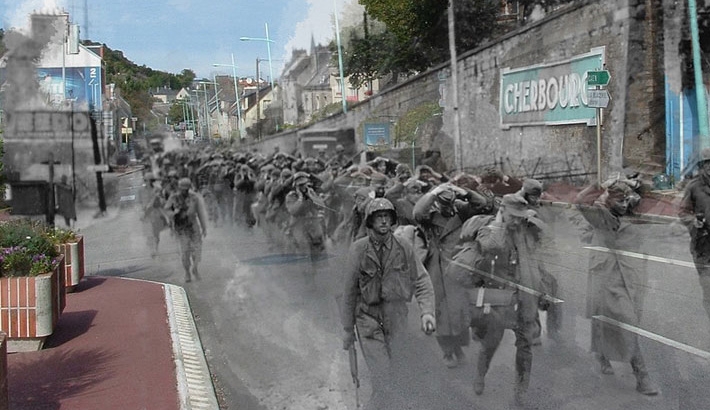
Superimposition
The placement of an image or video on top of an already-existing image or video, usually to add to the overall image effect, but also sometimes to conceal something.
Long take, short take
A long take is a shot lasting much longer than the conventional editing pace either of the film itself or of films in general. A short take is more or less the opposite; a shot lasting much shorter than the conventional pace.
Slow motion
An effect whereby time appears to be slowed down.
Ellipsis & expansion of time
An ellipsis is marked by an editing transition to omit a period or gap of time from the film's narrative. An expansion of time is where you make the duration of the video sequence longer than real-time.
Post production
Work done on a film or recording after filming or recording has taken place.
Visual effects
Sometimes abbreviated to VFX, visual effects are the processes by which imagery is created and/or manupulated outside the context of a live action shot.
Subscribe to:
Posts (Atom)