1. What is meant by the transition of image and sound?
A transition of sound is generally used to maintain the flow of the film into the next scene. This is usually done by removing all sound from a scene, perhaps inserting background music, and then fading in the sound from the next scene as it appears.A transition of image is the moving from one scene to another. There are many different ways of carrying this out, perhaps fading a scene to black and then having the next scene fade in from black. Although there are many different ways to do this and often more complex transiitons are needed at dramatic moments in the film.
2. Explain, in your own words, why editing is so important.
Editing in a film is much more important than I think most people realise. Without at least some editing, the film would not flow well and would look choppy and unfinished, as well as unprofessional. The editing of a film allows the adjustment of minute things that make a world of difference to the finished product. Such things include audio levels, transitions and cuts, things that most of us take for granted in a film but if they weren't included the film would not be as enjoyable.3. Find definition, examples and include brief analysis of the following types of cuts:
Shot/Reverse shotWhere one character is shown looking at another character (often off-screen), and then the other character is shown looking back at the first character
Eyeline Match
Begins with a character looking at something off-screen, followed by a cut of another object or person.
Graphic Match
Used to skip forward or backward in time while maintaining a continuity of action and creating a metaphorical link between the images that bookend the cut.
Jump Cut
An abrupt transition from one scene to another.
Crosscutting
Refers to intercutting a scene with portions of another scene, especially to heighten suspense by showing simultaneous action.
Parallel editing
The technique of alternating two or more scenes that often happen simultaneously but in different locations. If the scenes are simultaneous, they occasionally culminate in a single place, where the relevant parties confront each other. Similar to crosscutting.
Cutaway
The interruption of a continuously filmed action by inserting a view of something else.
Insert
A shot of part of a scene as filmed from a different angle and/or focal length from the master shot. They cover action already covered in the master shot, but emphasise a different aspect of that action due to the different framing.
Dissolve
A dissolve is a gradual transition from one image to another.
Cut
An abrupt, but usually trivial film transition from one sequence to another.
Fade-in, Fade-out
A gradual increase or decrease in the visibility of a scene.
Wipe
A type of transition where one shot replaces another by travelling from one side of the frame to another or with a special shape.
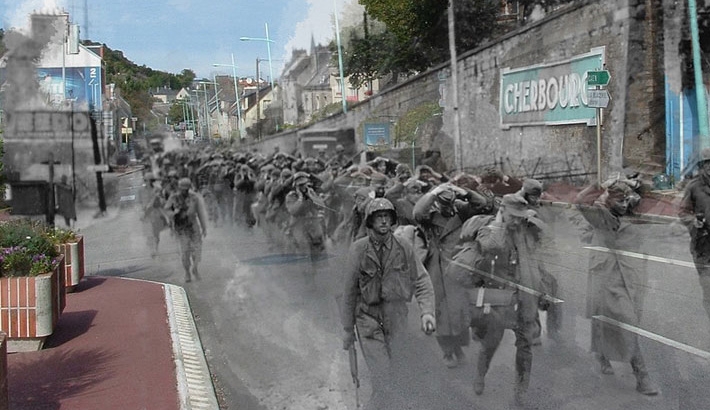
Superimposition
The placement of an image or video on top of an already-existing image or video, usually to add to the overall image effect, but also sometimes to conceal something.
Long take, short take
A long take is a shot lasting much longer than the conventional editing pace either of the film itself or of films in general. A short take is more or less the opposite; a shot lasting much shorter than the conventional pace.
Slow motion
An effect whereby time appears to be slowed down.
Ellipsis & expansion of time
An ellipsis is marked by an editing transition to omit a period or gap of time from the film's narrative. An expansion of time is where you make the duration of the video sequence longer than real-time.
Post production
Work done on a film or recording after filming or recording has taken place.
Visual effects
Sometimes abbreviated to VFX, visual effects are the processes by which imagery is created and/or manupulated outside the context of a live action shot.

No comments:
Post a Comment